St. Paul’s Episcopal Church We believe in regular worship, the sacraments, and teaching the Word of God through scripture, preaching, education and relationship. We encourage giving ourselves and our treasures as witness to God’s love. We welcome all people into our Christian family. History St. Paul’s Church is centrally located in the unique village of Stockbridge, Massachusetts, nestled in the Berkshire Hills, an area well-known for its cultural attractions and natural beauty. The church was originally organized (1834) in a stronghold of Congregationalism the year after an amendment to the Massachusetts Constitution ended the status of Congregationalism as the officially sanctioned, tax supported church in town. St. Paul’s has been blessed by stable leadership with three rectors over the last 44 years. Currently there are three retired rectors among the parishioners. The tenures of the last three rectors at St. Paul’s were quite long and held by “people of distinction.” John Tarrant was, during his nine years, an active Rotarian. He maintained active involvement in the community through pastoral care and civic activities. He served on the Board of Directors of Construct, an agency that promotes affordable housing for all. Committed to the environment, he enthusiastically put policy into practice by offering “Bishop’s Blend” fair trade coffee for sale through the church. Preceding John Tarrant, Theodore “Tad” Evans served as Rector for 21 years and became affectionately known as the “Vicar of Stockbridge” because of his open ministry to the town as a whole and the wisdom and caring of his service to community organizations and individuals. In particular, he was voted in as a volunteer fireman, served as Board President both for the Stockbridge Library and for Construct, and was one of the driving forces behind creation of the St. Paul’s Children’s Center. Douglas Krumbhaar came to the Episcopal ministry rather late in his life, although he had medically ministered to many in his first career as a obstetrician. Dr. Krumbhaar was a man of accomplishment and an intellectual. During his 14 year incumbency, he was responsible for initiating the Drop-In Center in the Parish House, a place where teenagers could go to relax with like-minded young people and, while there, find emotional and spiritual sustenance. Committed to youth, Dr. Krumbhaar recommended that a position on the Vestry be held by a young person and helped to implement a Deanery Youth Group. Looking back further into St. Paul’s history, it is interesting to note that the Interim Rector, Robert L. Curry, oversaw the demise of “paid pews.” After 1949, this “practice for the privileged” was no longer allowed. A close look at St. Paul’s records reveals that, although women served as Treasurer as early as 1933, no women served or apparently were allowed to serve on the Vestry until 1949, when three women began Vestry terms. In the ensuing years, and in keeping with the times, both women and men have held various leadership positions at St. Paul’s, including Senior Warden. For its first 50 years, St. Paul’s was housed in a wooden Gothic-Revival structure, taken down in 1883. The present church building is handsome and in good repair, as are the adjoining Rectory and Parish House. Both are old Stockbridge houses moved from other locations. Built of South Berkshire limestone in the Norman style, St. Paul’s Church was given by Charles E. Butler as a memorial to his wife, Susan Ridley Sedgwick Butler. The church building was designed by Charles F. McKim, partner of Stanford White and was McKim’s first church. The unusual tripartite arch at the transept, a unique piece of structural engineering, was the invention of a local carpenter, George Knowles, correcting an oversight by the distinguished architects from New York City. The stained glass in the church, through which often comes glorious morning sunlight, is notable for its beauty and variety. John La Farge created the Chancel window, a depiction of St. Paul, and the windows flanking the font in the baptistry are by Louis Comfort Tiffany. The Pentecostal dove clerestory window high above the altar was added in 1988. The statue on the porch, “The Spirit of Life,” is by Daniel Chester French. The singing children on the wall below the organ loft are replicas of carvings designed by Luca Della Robbia for the Duomo in Florence. As Gerard Chapman’s excellent 1985 history, St. Paul’s Episcopal Parish 1834-1984, shows, St. Paul’s today is an outgrowth of Stockbridge being the country resort of wealthy New Yorkers of social prominence and professional eminence. St. Paul’s attained its greatest growth in the generations between the end of the Civil War and the Second World War, and owes its endowment to the generosity of parishioners of that era and its subsequent prudent management.
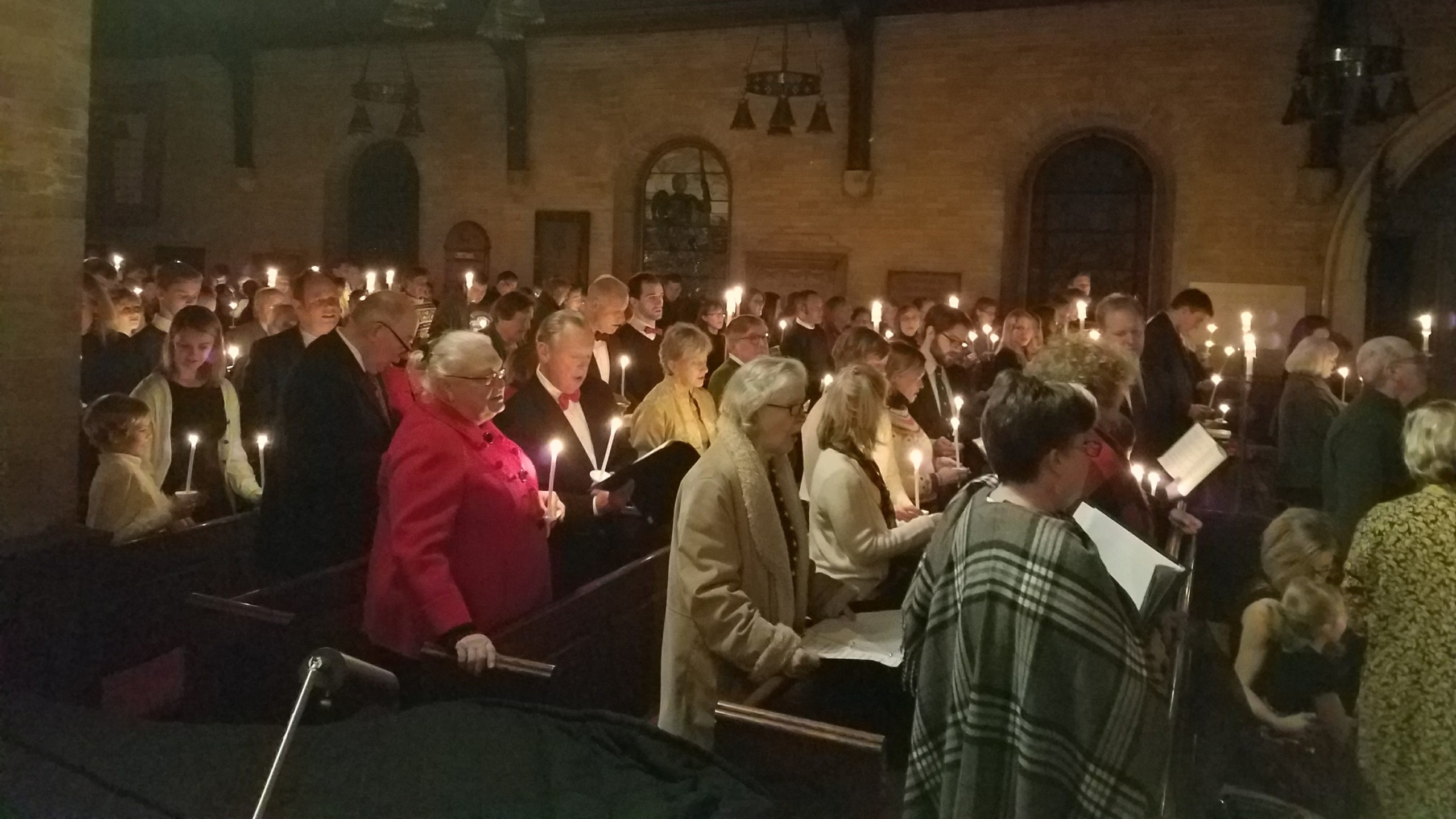
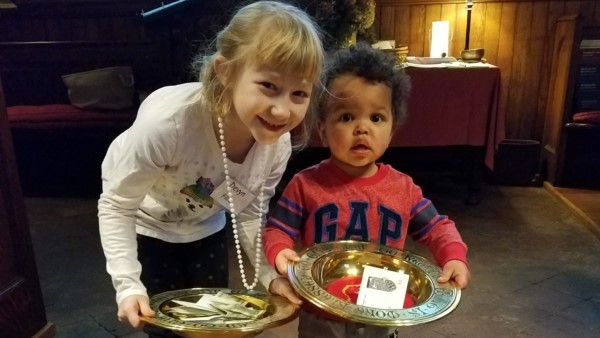
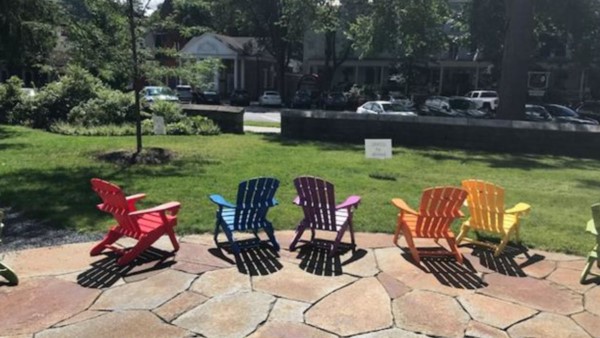
Parish Profile St. Paul’s continues to be influential in terms of service to individuals and the community, for it sees itself not as a strictly denominational outpost “for members only,” but as a public institution bringing the ideas of justice, forgiveness, reconciliation, and service to others into practical play everywhere within its reach, not the least via the involvement of its members in community affairs in countless ways. Those who attend St. Paul’s today seem not so much concerned with issues of churchmanship, but they do like an easy dignity and considerate respectfulness in the conduct of services. The medium is not the message. They come because what they hear and experience at St. Paul’s enlarges the meaning of their lives. St. Paul’s currently counts about 90 people as active members, a 30% increase in the last 10 years. Reflecting its growth, St. Paul’s has recently completed a major successful Capital Campaign, making possible a sound system in the church, universal accessibility of the church and Parish House, the Memorial Garden and attractive landscaping to maintain the beauty of the grounds and make parking easy. Connections within and to the community are very important to parishioners of St. Paul’s Church. In the Fall, members gather to rake leaves and put the gardens to bed. Each Thanksgiving, dinner is prepared by church members and offered to all in the area who wish to attend. Again in the Spring, there is a Clean-Up Day. Everyone, both young and old, pitches in. A spirit of cooperative industry, along with picnic fare and barbecue, are the ingredients that replenish the spirits and energy of the workers. One Sunday evening each month, a Community Supper is held in the Parish House; fellowship and healthy food are offered and warmly received. The annual meeting is an important occasion that brings together the “8 o’clockers and the 10 o’clockers” as well as a special opportunity for a potluck supper for all ages. Outreach has always been seen as a critical aspect of the mission of St. Paul’s Church. A significant number of monetary contributions are made to area agencies and organizations each year. The purpose of St. Paul’s periodic mini-auctions and fairs is, besides providing a chance for socializing, always to raise funds for “causes” outside the parish. St. Paul’s takes charge of the Food Pantry at St. George’s Church in Lee on the second Saturday of each month, dispensing non-perishable food, along with loaves of bread and seasonal produce, collected at St. Paul’s and other community churches. From time to time, musical and theatrical groups give performances in the church which has excellent acoustics, and a few community and support groups use the Parish House for their regular meetings. St. Paul’s membership is quite mobile, drawing from not just Stockbridge, but a 20 mile radius around it. Members come so far not out of obligation but because they actively wish to. Seldom or never are all here at one time. They travel on business, they travel for pleasure, they go south for the winter or back to their homes in the city, they travel to visit distant families. Recently the average age of parishioners has gone down due to the addition of a significant number of families, attracted in part by Sunday School and Nursery Care, initiated eight years ago under the leadership of the Rector and his wife. Currently 18 children, ages 4 to 13, are registered in Sunday School; they are taught by volunteers from the St. Paul’s community. On occasion, a women’s Bible Study group gets together a few weekday evenings a month. During Lent, various programs have been held, including “home churches,” a time for simple supper, study and reflection. There has also been an active Prayer Group. An informal choir sings at Easter and Christmas but there is no regular paid or volunteer choir. In the last year, the choir has set a goal of singing once a month at the 10 AM service. Periodically, paid soloists are engaged by the organist(s) whose position is also a paid one. This position is currently shared by two people, allowing more flexibility for each. They share the job of rehearsing and directing the choir. An ongoing success of parish sponsorship is St. Paul’s Children’s Center, one of the first in the Berkshires, a community day-care center founded over 30 years ago and housed in the Parish House. Overseen by a committee appointed by the Vestry as a self-sustaining activity, the day care center operates at near capacity, with a lengthy waiting list, of approximately 40 children per year. The teaching staff of three has brought the Children’s Center to a high standard of excellence and renders an invaluable community service. The church is kept open daily, attracting an astonishing number of casual visitors. Comments in the visitors’ book are a testament to the value of this “silent ministry.” Casual contributions by visitors in the galvanized “Drop-In-The-Bucket” pail placed in the church for this purpose come to an appreciable amount annually. St. Paul’s is a small but vigorous church whose style is dignified informality and whose openness to reasoned innovation continues to enable it to adapt creatively to changed circumstances and changing needs. Community Profile St. Paul’s Church is located in Stockbridge, Massachusetts. The town is in the south-central part of Berkshire County, the western-most county in Massachusetts. “ The Berkshires,” as the region is commonly known, border Connecticut, New York and Vermont. Stockbridge, which is 10 minutes from Massachusetts Turnpike interchanges 1 and 2, is approximately 2.5 hours from both Boston and New York City. Albany, N. Y. is 45 minutes away. Pittsfield, the largest city in Berkshire County, is 20 to 25 minutes away. The Berkshires boast the beauty of mountains, lakes, woodlands, and open fields. It is an area of small cities, attractive towns, vibrant villages, and plenty of open space. Stockbridge is the home of Laurel Hill Society, the first village improvement organization in the country founded in the 18th century. The Berkshires were first settled by farmers. In time, manufacturing became the dominant factor in the economy (though farming was, and still is, of economic significance). Paper mills, manufacturers of paper-making and electrical machinery, woolen mills, shoe factories, and even the nation’s longest surviving rake factory, sprang up along swift-running rivers that provided power. Over the years, many of these industries have disappeared. Others have down-sized or changed their focus. The General Electric plant in Pittsfield--once the economic powerhouse of the county employing 13,000—was gradually stripped of most of its manufacturing operations. What remained was sold and is now a unit of General Dynamics, the aerospace and defense giant. Pittsfield remains the global headquarters of GE Plastics. Other large industries include paper manufacturing, health care, and insurance. Berkshire Medical Center in Pittsfield, a teaching affiliate of the University of Massachusetts, is also a major employer. A close neighbor of St. Paul’s is the Austen Riggs Center, one of the nation’s premier private psychiatric treatment centers. As the region is somewhat isolated from other metropolitan areas, Berkshire County supports a large professional community. It is also home to many entrepreneurs who find it convenient to live in the country and “telecommute” to offices in major metropolitan cities up and down the east coast and beyond. A major factor in the Berkshire economy is tourism. This trend began in the late 19th century when Stockbridge was the summer retreat for some of America’s wealthiest families. Though the great “cottages” are no longer inhabited by titans of industry, their families, and servants, the Berkshires remain a popular weekend and vacation destination, as well as an attractive location for second homes. The primary attractions are four-season outdoor recreation (lakes, hiking, skiing, etc.) and a rich variety of cultural pursuits. Classical music, theater, dance, and art are abundant, especially in summer. Tanglewood, located at the northern edge of Stockbridge, is the summer home of the Boston Symphony Orchestra. Stockbridge, for many years the home town of Norman Rockwell, now boasts of the Norman Rockwell Museum, the repository of the largest collection of the noted illustrator’s original works. The population is changing in the Berkshires and its communities. Some of these demographic shifts are manifestations of national trends -- an aging population, more single parent homes, and fewer children and teenagers. The residents are overwhelmingly white (Berkshire County as a whole is primarily white, with a small but growing Hispanic and Asian population). Higher-paying manufacturing jobs have been displaced by lower-paying service positions. On the other hand, the region has experienced growth in small businesses, including specialized retail operations. The median income may be near the state average, but there is a greater than normal skew, resulting in more upper income and more lower income residents and fewer than expected in the so-called “middle”. Stockbridge, West Stockbridge, and Great Barrington form the Berkshire Hills Regional School District. The district has recently completed two state of the art school buildings which serve children in grades K-8. The “campus,” located on Route 7 between Great Barrington and Stockbridge, comprises Muddy Brook Elementary (K-4), Monument Valley Middle School (5-8), and Monument Mountain Regional High School (9-12). Berkshire Country Day School, a private K–12 school, is located in Stockbridge. There are several independent secondary schools in the area, including Berkshire School, Miss Hall’s School, and Darrow School. Berkshire Community College, a state two-year college, offers courses in Pittsfield and Great Barrington. Four-year colleges in Berkshire County include Simon’s Rock Early College, Massachusetts College of Liberal Arts and Williams College. Colleges and universities in the Albany, N.Y., area (RPI, SUNY Albany, Russell Sage, College of St. Rose) and the Connecticut Valley (Smith, University of Massachusetts at Amherst, Mt. Holyoke, Amherst, Westfield State, and Hampshire College) are accessible. The Berkshires in general, and Stockbridge in particular, have undergone significant changes in recent years. The decline in stable manufacturing jobs has been accompanied by a boom in tourism. The popularity of Stockbridge as a “typical New England town” has, in fact, stripped it of many of the essentials of a small town: a hardware store, a drug store, inexpensive places to eat. High property values have priced many young families out of Stockbridge and brought in many second home owners who are less active in the community. The vast majority of children who go to college do not return to the Berkshires, primarily because there are relatively few career opportunities for them here. Yet the region retains its unspoiled natural beauty. Its towns, schools, and parks are well-maintained and safe. There is strong community spirit, enlivened by a mix of old-line residents and relative newcomers. Stockbridge and the surrounding Berkshires may appear on countless postcards and calendar photos, but the area is no stage set. It is a complex and stimulating community.
|